

What drives mobility today – and will drive it tomorrow
Our blog: Strategies, practical examples, and expertise for decision-makers in public transportation.
Events
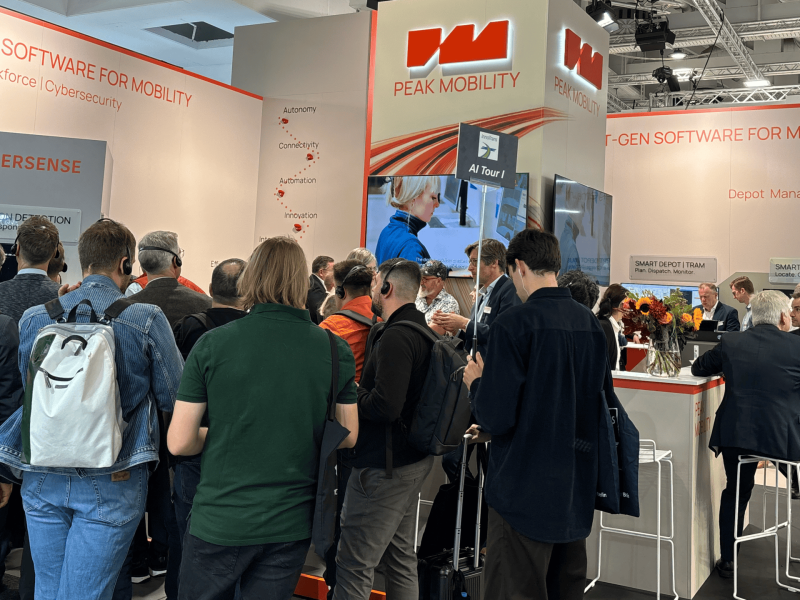
Engaging discussions, concrete insights, and a key takeaway: The future of public transit can only be shaped if vehicles, energy, personnel, and operations are considered as a unified whole. Our review highlights the key takeaways from Berlin—and why forward-looking planning plays a crucial role in this process. IThe focus was on solutions that help transportation companies manage complex processes more efficiently and maintain an overview. One thing became particularly clear: Electric mobility is changing not only propulsion technology, but also the planning of routes, charging times, and parking processes. Learn more about predictive dispatching and find out which ideas and discussions will stay with us long after InnoTrans is over.
Depot Automation
Predictive Dispatching
InnoTrans 2026
Depot Management
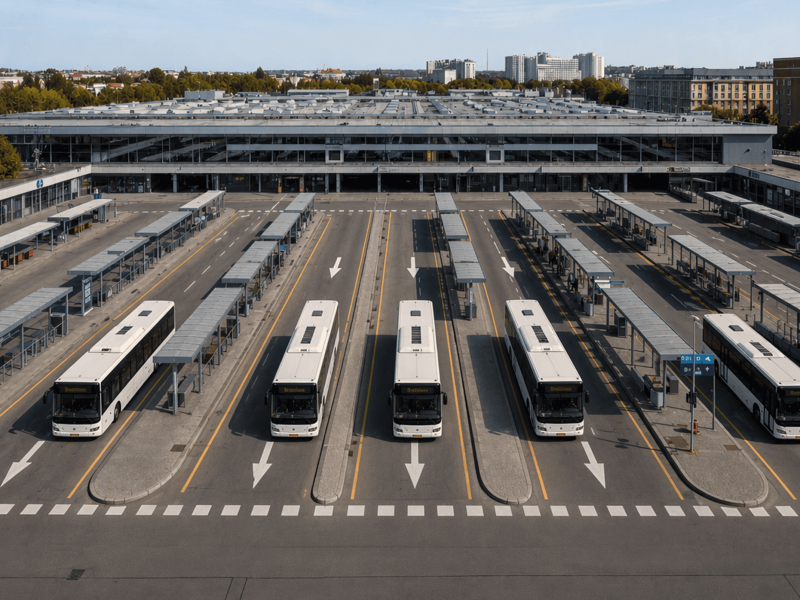
Electrification is fundamentally changing how transit agencies operate. In addition to vehicles and schedules, factors such as range, charge levels, and charging capacity must now be taken into account. Many companies still manage this complexity reactively: problems are identified only after they have already impacted operations.
Predictive dispatching takes a different approach. Using forecasts, risks are identified early on and solution options are automatically suggested. This results in more cost-effective processes, more stable operations, and better utilization of available resources.
Depot Automation
Efficiency
Energy Optimization

Cybersecurity
In the past, a train would be canceled if a rail tie broke. Today, all it often takes is an encrypted ticketing system, a control center operating in emergency mode, or a passenger information system that simply goes silent. Networked control centers, digital ticketing, and automated depots are fundamentally transforming local public transit: What used to be controlled by individual, isolated systems is now interconnected, and every new interface simultaneously increases the attack surface. For operations and management, this shifts the critical question: not whether an attack will occur, but how quickly it will be detected while operations continue.
Attack Detection
Security
Cybersense Deception
Depot Management
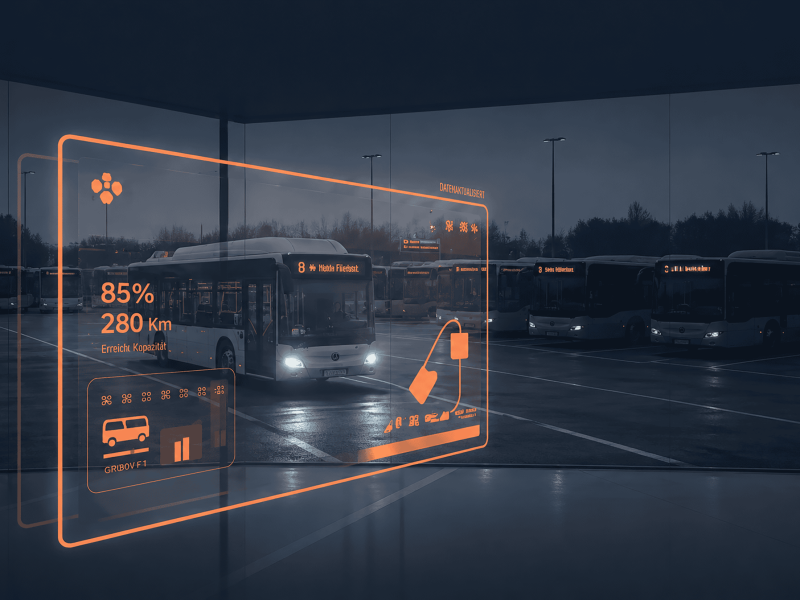
The route has been assigned, and the vehicle departs on time—so far, so good. But a few hours later, there isn’t enough range left for the next assignment, or the vehicle is stuck in the depot and can’t get out because it’s blocked by another vehicle. What follows is a familiar scenario for many dispatchers: last-minute rescheduling, manual interventions under time pressure, and, in the worst case, canceled trips. As the proportion of battery-electric buses in the fleet grows, this pattern becomes a structural challenge—and traditional scheduling approaches are reaching their limits.
Depot Automation
Efficiency
Energy Optimization
Personnel scheduling
PROFAHR.X and AI: Modern Technology for Stable Processes in Everyday Transportation Artificial Intelligence in Software Development Hardly a day goes by without talk of artificial intelligence and its impact on our daily lives. It is becoming increasingly clear that AI is no longer an abstract technology of the future, but rather a tool that can create tangible added value—including in the day-to-day operations of transportation companies.
PROFAHR.X
Personnel scheduling
KI
Depot Management
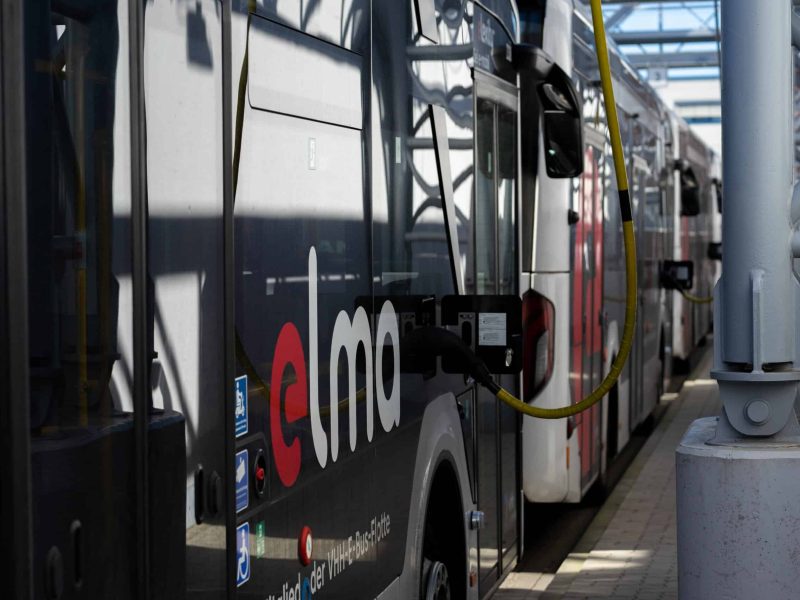
Verkehrsbetriebe Hamburg-Holstein GmbH (VHH), which has been operating under the brand name vhh.mobility since 2024, is setting standards for a sustainable mobility future. With over 105 million passengers a year, almost 2,900 employees and around 800 buses at 17 locations, vhh.mobility is one of the largest municipal bus operators in Germany. The ambitious goal: in the 2030s, the entire fleet is to consist exclusively of battery-electric buses – charged with 100% green electricity.
Depot Automation
Electrification
Sustainability
Research project
How can (semi-)automated driving in depots make operational processes significantly more efficient? Faced with a shortage of skilled workers, rising costs, and the transition to climate-friendly drive systems, transport companies are looking for solutions to automate processes such as washing, refueling, charging, and shunting. This article shows which concepts are already being tested — and how they could be put into practice.
Depot Automation
Efficiency
Sustainability
Train Management
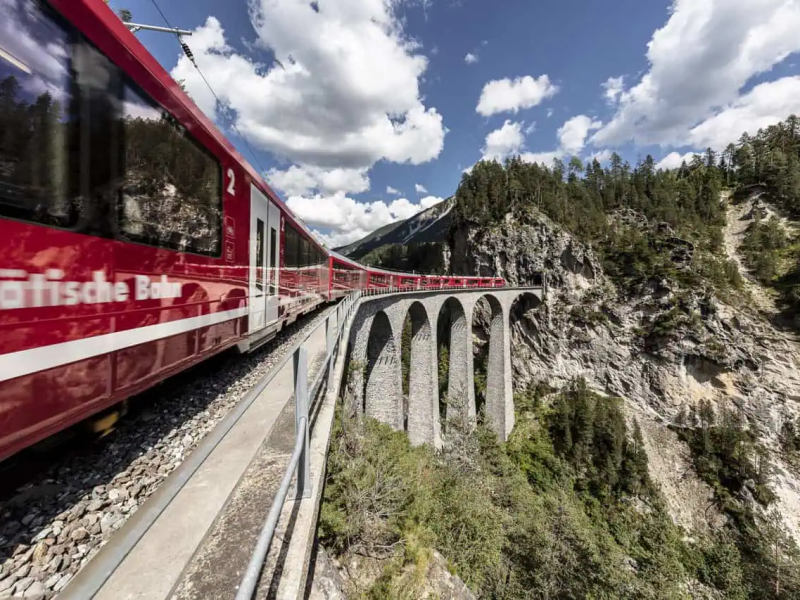
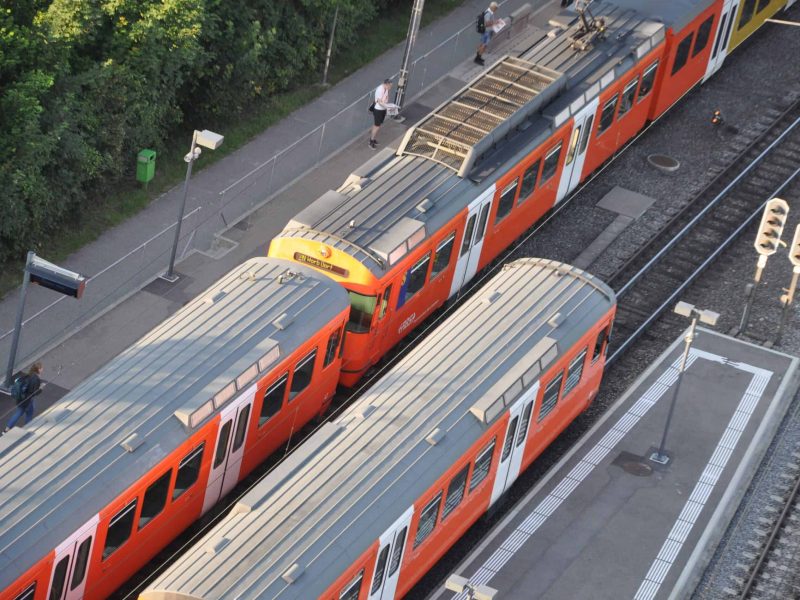
One Train, Two Destinations: Passengers traveling with the Rhaetian Railway may find themselves on a so-called split train — a train that heads toward different final destinations. Seamless coordination between the dispatching and passenger information systems ensures that travelers board the correct section of the train and arrive at their desired destination comfortably.
Split train operations
Passenger information
Train dispatching
Personnel scheduling
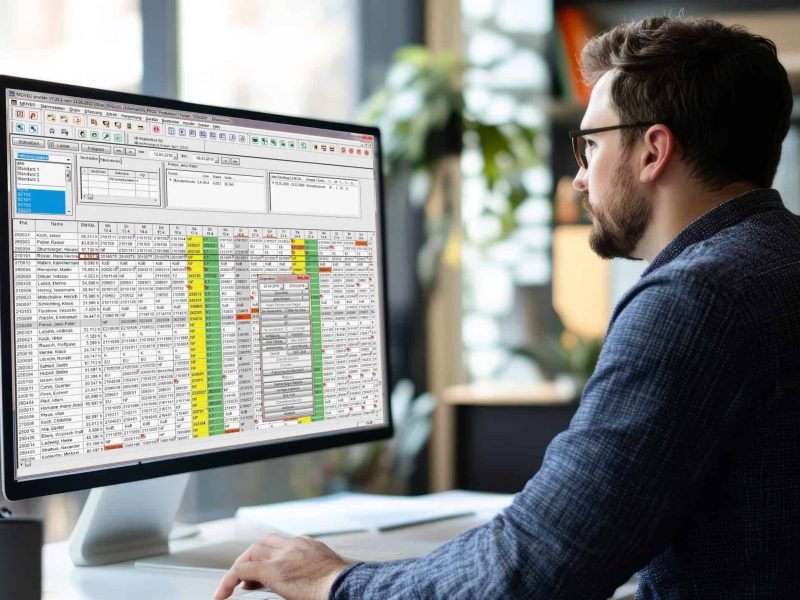
For a long time, tabular planning methods were considered the standard in personnel scheduling. Modern solutions, on the other hand, increasingly rely on graphical approaches that clearly visualize individual planning aspects and their interrelationships. In this article, you will learn why the combination of both approaches will shape the future of duty scheduling.
Personnel scheduling
Staff scheduling
Graphic tools
Train Management
In order to expand public transport as quickly as possible, concepts are needed that make do with existing capacities – above all infrastructure, but also available energy. One promising approach is the development of intelligent control systems that efficiently link the operation and control of traction power networks.
Traction power control
Energy efficiency
Operational management